
Al Fasher: The UAE's Slaughterhouse
POLITICS
Asma Issa
11/1/20255 min read
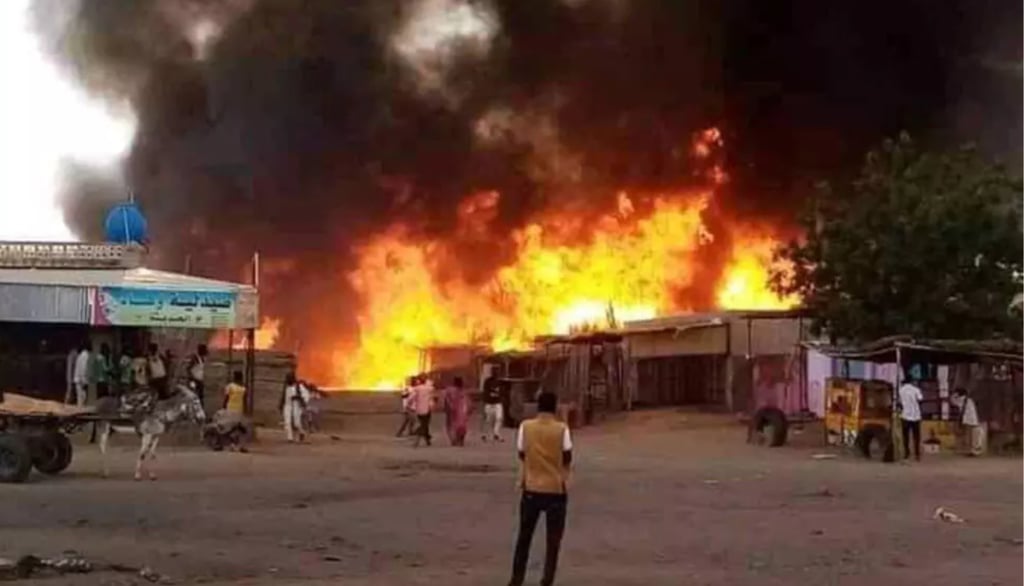
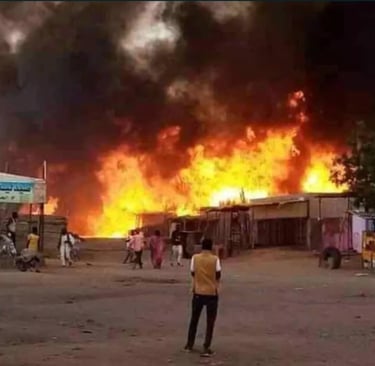
Once the capital of a sultanate, a caravan hub, and an agricultural centre, Al Fasher today has become emblematic of Sudan’s deepening catastrophe. With a population estimate today of around 415,00 (not counting the wider hinterland) the city is a complex urban centre and strategically significant. Situated in western Sudan on trade routes linking Libya and Chad, its capture on 27 October by the Rapid Defence Forces (RSF) effectively completes the paramilitary’s control of all five Darfur states, giving them command over roughly a quarter of Sudan’s landmass and crucial cross-border leverage.
Reports from medical teams, first-responders and satellite imagery show thousands of civilians killed in the days following RSF entry; hospitals and mosques turned into scenes of massacre; graves of bodies murdered, tortured and raped, neighbourhoods razed; mass flight of civilians. Al Fasher has become a sign post of how the RSF, and the foreign backers that spawned it, has made Darfur synonymous with mass extermination.


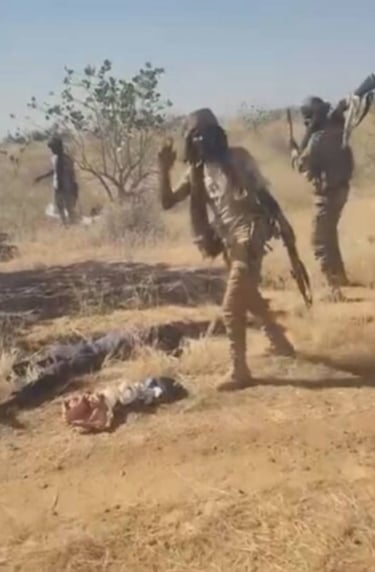

Videos posted to social media by RSF commander Abu Lulu show him detaining and killing civilians.
RSF commanders torture 22-year-old Gisma Ali Omer by hanging her from a tree.
From Janjaweed to RSF: Continuity and Transformation
To understand Al Fasher’s collapse requires returning to the region’s violent history. In the early 2000s, militias known as the Janjaweed (coming from Janjad, meaning ‘to go out and loot’) were deployed to crush rebellions by groups such as the Sudan Liberation Movement and the Justice and Equality Movement. Under commanders like Musa Hilal, they guarded trade and smuggling routes, raided villages and waged counter-insurgency campaigns that quickly veered into ethnic cleansing
Under Omar Al-Bashir, these militias were rebranded as the Rapid Support Forces: uniformed but never integrated into the Army. Mohammed Hamdan Daglo, ‘Hemedti, rose to lead them turning the RSF into a state within a state, anchored in resource extraction and trade. Accounts of rape, burning, and terror, and the thousands killed, attest to the unbroken lineage between the Janjaweed and the RSF.
Even more troubling, the Yale School of Public Health’s Humanitarian Research Lab (HRL) released its third report on Friday, analysing satellite images taken after the RSF seized Al Fasher five days earlier. The imagery showed no sign of the mass civilian exodus that would normally follow such an assault and despite ‘indicators that mass killing is continuing are clearly visible’. Instead, the report warned, the absence of movement “raises the likelihood that the majority of civilians are dead, captured, or in hiding.”
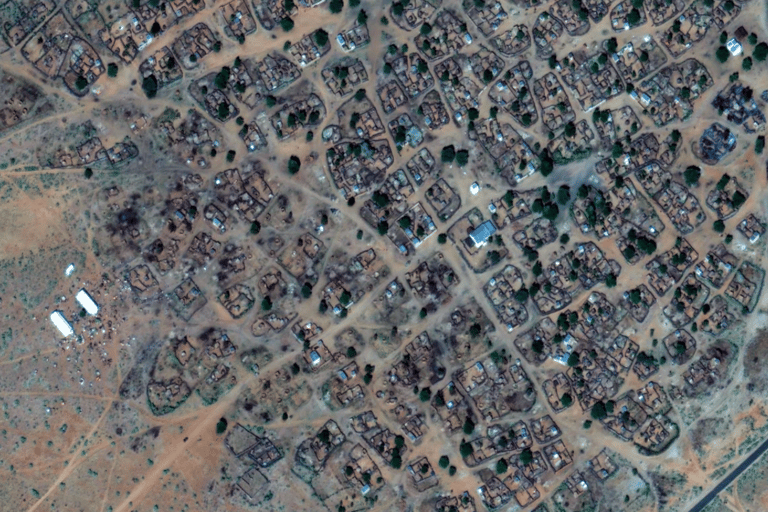
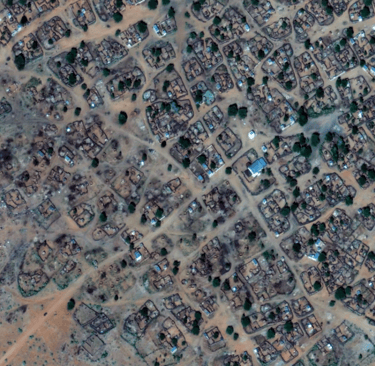
People gather on the outskirts of a village northwest of al-Fāshir, Sudan, October 30, 2025. (AFP/Vantor/Handout)
The UAE’s role: Gold and Arms
A crucial and chilling axis in this catastrophe is external patronage, primarily the United Arab Emirates. Abu Dhabi’s strategic influence in Sudan combines commercial investment with a willingness to back armed actors who use any method to secure access to resources and strategic corridors. Just yesterday, Sudan’s representative at the UN security Council meeting said ‘we are the ones who founded its (UAE’s) glory and built its heritage and modern rise with our hands’. He ended the fiery statement by asking the council to ‘name and condemn the Emirates so that the war will stop’
In recent years, Abu Dhabi has invested billions of US dollars into Sudan and in return has gained access to arable land, access to trade through the Red Sea, and natural resource flows (especially Gold) that feed the Gulf’s markets. In fact, gold is central to this relationship. Mines in Darfur and other RSF-controlled areas have become a revenue stream: gold is extracted, trafficked and absorbed into international markets, with Dubai the central hub. One interview with a senior RSF intelligence official claimed that planes landing in Darfur were bringing weapons from the UAE, and that the “financial relationship” between RSF and UAE is such that Darfur’s gold mines and the UAE’s trading hub are linked. These lucrative flows finance arms and fighters and sustain the RSF’s operational capacity. Therefore, the atrocities within, and the seizure of, cities like Al Fasher is explicitly linked to the extraction and export of Sudanese Gold into Emirati markets.
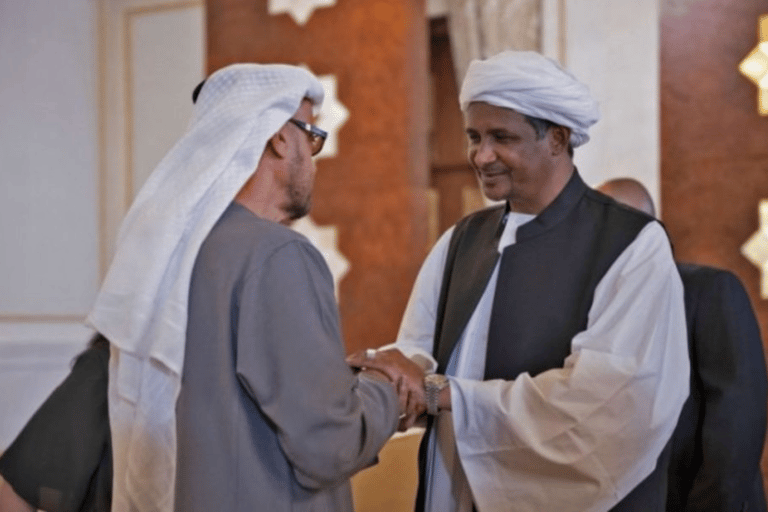
Commander of the Rapid Support Forces, Hemeti, and UAE President, Mohammed bin Zayed.
But the UAE’s footprint in Sudan is part of a broader regional strategy aiming to strengthen its economic and military foothold in East Africa through influence over key maritime trade routes and ports enabled by its control over the Red Sea. Furthermore, in Eastern Libya it continues to support Khalifa Haftar with money, arms and logistics to secure oil ports and trade routes; in Yemen it backs southern proxies in order to secure ports along the southern Red Sea; in Egypt it backs the military consolidation that installed Abdel Fattah el-Sisi. Across these arenas, the UAE’s policy includes proxy and paramilitary support, investments in ports and special economic zones to secure trade corridors, and diplomatic cover framed as mediation and stabilisation. As one expert put it, the UAE “fuels Sudan’s conflict while posing as a mediator.”
The capture of Al Fasher completes the RSF’s consolidation of Darfur. For the UAE this means their influence now extends across the entirety of that lucrative region, bringing control of multiple mineral-rich zones, a land-bridge to the central and western parts of Sudan, and leverage over Darfur’s civilian population.
Consequences and The Rhetoric of Impunity
The immediate human consequences are heartbreaking and graphic. Testimonies describe hospitals turned into execution sites, maternity wards with bodies of mothers and newborns, systematic sexual violence and men publicly celebrating murders on social media. Local authorities say the siege was a deliberate tactic: to starve, isolate and then subdue Al Fāsher, while international attention was diverted elsewhere.
The consequences radiate far beyond Sudan’s borders. A Darfur under paramilitary control reshapes regional stability, refugee flows and the security of neighbouring states. The political architecture enabling this violence, state weakness, paramilitary autonomy, foreign funding, and impunity, ensures that atrocities can occur with little accountability. Abu Dhabi’s engagement in Sudan is part of a broader regional strategy, connecting Sudan to conflicts in Libya, Yemen, and Egypt, and reflecting a pattern of influence in which paramilitary proxies, resource control, and strategic investments converge to mould reality on the ground.
Sudan’s tragedy is a reminder that modern empire can be subtle and transnational. It operates through finance, logistics and political patronage rather than flags and formal colonies. When powerful actors prioritize strategic access, regional influence, and resource control above human rights, entire populations pay the price. Al Fasher today stands as a ruinous testament.

